Sunday, February 12, 2012

Could chocolate help mend a broken heart?

A major Swiss chocolate maker is hoping to give cardiovascular patients a good excuse to reach for a chocolate bar and is asking Europe’s highest food safety authority to approve a health claimlinking cocoa flavonoids with improved blood flow.

In an interview with online trade publication NutraIngredients.com last week, a company spokesperson for premium chocolate supplier Barry Callebaut said the company is “confident” that theEuropean Food Safety Authority will approve the claim based on the results of five clinical studies conducted and finalized last year.

Flavonoids are plant-based antioxidants found in brightly colored foods like blueberries, strawberries, cranberries, red beans, nuts,red wine and tea. They've been associated with a decreased risk of age-related and chronic diseases.

Healthy blood flow has become an emerging trend in functional foods recently, with a spate of food manufacturers developing products that claim to help clean the arteries and reduce LDL or "bad" cholesterol levels. 

One of the pioneering artery cleaning products on the market, Fruitflow, is a tomato-based extract that was the first to win EU approval for its nutritional health claims under a section reserved for proprietary and newly emerging science.

Meanwhile, other chocolate makers have also clued into the strategy of delivering powerful health benefits via the sweet confectionery. 

At the Winter Fancy Food Show in San Francisco this weekend, US-based company ResVez will showcase products it claims can boost the immune system and serve as anti-aging chocolate bars.

The TravelTime granola bar, for instance, is made with a beta-glucan extract derived from baker's yeast that "trains" the body to strengthen the immune system, while the chocolate WineTime Bar contains enough resveratrol to equal 50 glasses of red wine. Resveratrol is a powerful antioxidant found in the skin of red grapes and is known to help fight free radical damage.

Source: Yahoo News

Saturday, February 11, 2012

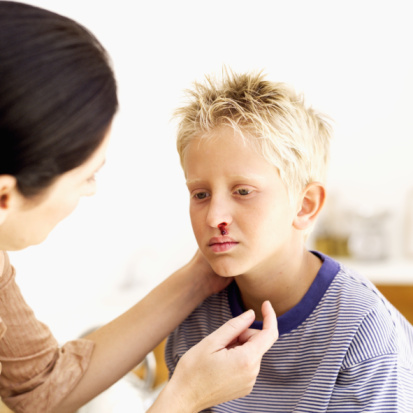
Nosebleed (Epistaxis): First Aid


Where does the blood in a nosebleed come from?
The blood usually comes from a blood vessel located in the front of the nasal septum (nasal partition) or further back in the nasal cavity.


What can cause a nosebleed?
·         Picking the nose.
·         A blow to the nose or damage to the mucous membrane.
·         cold or flu.
·         nasal allergy.
·         Dry mucous membranes in the nose due to a stuffy indoor atmosphere.
·         Hypertension (high blood pressure) - rarely.
·     Certain kinds of medication; for instance, products that reduce the viscosity of the blood (such as aspirin (eg Micropyrin)and non-steroidal anti-inflammatory drugs).
·         Exposure to chemicals that may irritate the mucous membranes.
·         Deviation of the nasal (septum).
Most nosebleeds occur for no obvious reason.

Other rare causes of nosebleeds
·         Blood diseases such as leukaemia or haemophilia.
·         Tumours in the nasal cavity.
·         Osler's disease.

Danger signals in a severe nosebleed
·         Heavy bleeding.
·         Palpitation, shortness of breath and turning pale.
·         Swallowing large amounts of blood, which will cause you to vomit.

How to avoid nosebleeds
·         Avoid damaging the nose and excessive nose-picking.
·         Seek medical treatment for any disease causing the nosebleeds.
·         Get a humidifier if you live in a dry climate or at high altitude.

What to do if you get a nosebleed
·         Sit in an upright position with your head bent forward.
·         Hold the tip of your nose for five minutes while breathing through the mouth.
·         If the bleeding stops and then returns, hold your nose for 8 to 10 minutes. This will allow time for the blood to clot.
·         Applying an ice-pack to your nose may help.

Good advice
·         Do not blow your nose for the next 12 hours after the bleeding has stopped. This will help the dried blood to remain in place.
·         Do not swallow the blood. It can cause you to become nauseous and vomit, or could conceal a greater blood loss.
·         If you frequently suffer from nosebleeds you should seek help from your doctor.

The most likely development
·         The bleeding usually stops if you follow the above instructions.
·         Heavy bleeding may require hospital treatment and, in rare cases, a blood transfusion.

How is heavy bleeding treated and what kind of medication can be given?
Contact your doctor if the advice described above does not help stop the bleeding.
Initially, the doctor will try to stop the bleeding by using something that will make the blood vessels contract.
When the bleeding has stopped, the doctor may choose to cauterise the source of the bleeding with a chemical to prevent it bleeding again.

If the bleeding fails to stop, it may be necessary to put a pack in the nose.
In rare cases, an operation may be necessary to tie off the blood vessel that supplies the bleeding area.
If the bleeding is caused by another disease, such as increased blood pressure, it is very important to seek treatment to avoid recurrence of nosebleeds.

Nosebleeds can be very intermittent, and between bleeds it may be very difficult to determine their source. If this occurs it is best to ensure that the nose is inspected during a bleed, which might mean needing to be assessed 'out of hours' by the on-call GP or local casualty unit.

Burns: First Aid


To distinguish a minor burn from a serious burn, the first step is to determine the extent of damage to body tissues. The three burn classifications of first-degree burn, second-degree burn and third-degree burn will help you determine emergency care.
1st-degree burn

The least serious burns are those in which only the outer layer of skin is burned, but not all the way through.

  • The skin is usually red
  • Often there is swelling
  • Pain sometimes is present
Treat a first-degree burn as a minor burn unless it involves substantial portions of the hands, feet, face, groin or buttocks, or a major joint, which requires emergency medical attention.
2nd-degree burn
When the first layer of skin has been burned through and the second layer of skin (dermis) also is burned, the injury is called a second-degree burn.

  • Blisters develop
  • Skin takes on an intensely reddened, splotchy appearance
  • There is severe pain and swelling.
If the second-degree burn is no larger than 3 inches (7.6 centimeters) in diameter, treat it as a minor burn. If the burned area is larger or if the burn is on the hands, feet, face, groin or buttocks, or over a major joint, treat it as a major burn and get medical help immediately.
For minor burns, including first-degree burns and second-degree burns limited to an area no larger than 3 inches (7.6 centimeters) in diameter, take the following action:
  • Cool the burn. Hold the burned area under cool (not cold) running water for 10 or 15 minutes or until the pain subsides. If this is impractical, immerse the burn in cool water or cool it with cold compresses. Cooling the burn reduces swelling by conducting heat away from the skin. Don't put ice on the burn.
  • Cover the burn with a sterile gauze bandage. Don't use fluffy cotton, or other material that may get lint in the wound. Wrap the gauze loosely to avoid putting pressure on burned skin. Bandaging keeps air off the burn, reduces pain and protects blistered skin.
  • Take an over-the-counter pain reliever. These include aspirin, ibuprofen (Advil, Motrin, others), naproxen (Aleve) or acetaminophen (Tylenol, others). Use caution when giving aspirin to children or teenagers. Though aspirin is approved for use in children older than age 2, children and teenagers recovering from chickenpox or flu-like symptoms should never take aspirin. Talk to your doctor if you have concerns.
Minor burns usually heal without further treatment. They may heal with pigment changes, meaning the healed area may be a different color from the surrounding skin. Watch for signs of infection, such as increased pain, redness, fever, swelling or oozing. If infection develops, seek medical help. Avoid re-injuring or tanning if the burns are less than a year old — doing so may cause more extensive pigmentation changes. Use sunscreen on the area for at least a year.
Caution
  • Don't use ice. Putting ice directly on a burn can cause a person's body to become too cold and cause further damage to the wound.
  • Don't apply egg whites, butter or ointments to the burn. This could cause infection.
  • Don't break blisters. Broken blisters are more vulnerable to infection.
3rd-degree burn

The most serious burns involve all layers of the skin and cause permanent tissue damage. Fat, muscle and even bone may be affected. Areas may be charred black or appear dry and white. Difficulty inhaling and exhaling, carbon monoxide poisoning, or other toxic effects may occur if smoke inhalation accompanies the burn.

For major burns, call 911 or emergency medical help. Until an emergency unit arrives, follow these steps:
  1. Don't remove burned clothing. However, do make sure the victim is no longer in contact with smoldering materials or exposed to smoke or heat.
  2. Don't immerse large severe burns in cold water. Doing so could cause a drop in body temperature (hypothermia) and deterioration of blood pressure and circulation (shock).
  3. Check for signs of circulation (breathing, coughing or movement). If there is no breathing or other sign of circulation, begin CPR.
  4. Elevate the burned body part or parts. Raise above heart level, when possible.
  5. Cover the area of the burn. Use a cool, moist, sterile bandage; clean, moist cloth; or moist cloth towels.
Get a tetanus shot. Burns are susceptible to tetanus. Doctors recommend you get a tetanus shot every 10 years. If your last shot was more than five years ago, your doctor may recommend a tetanus shot booster.

Goiter

DEFINITION
Your thyroid is a butterfly-shaped gland located at the base of your neck just below your Adam's apple. Sometimes the thyroid gland grows larger than normal — a condition known as goiter. Although goiters are usually painless, a large goiter can cause a cough and make it difficult for you to swallow or breathe.

The most common cause of goiter worldwide is a lack of iodine in the diet. In the United States, where most people use iodized salt, goiter is more often due to the over- or underproduction of thyroid hormones or to nodules that develop in the gland itself.

Treatment depends on the size of the goiter, your symptoms and the underlying cause. Small goiters that aren't noticeable and don't cause problems usually don't need treatment.

SYMPTOMS
Not all goiters cause signs and symptoms. When signs and symptoms do occur they may include:
A visible swelling at the base of your neck that may be particularly obvious when you shave or put on makeup
A tight feeling in your throat
Coughing
Hoarseness
Difficulty swallowing
Difficulty breathing

CAUSES
Your thyroid gland produces two main hormones — thyroxine and triiodothyronine (T-3). These hormones circulate in your bloodstream and help regulate your metabolism. They maintain the rate at which your body uses fats and carbohydrates, help control your body temperature, influence your heart rate, and help regulate the production of proteins. Your thyroid gland also produces calcitonin — a hormone that helps regulate the amount of calcium in your blood.

Your pituitary gland and hypothalamus control the rate at which these hormones are produced and released. The process begins when the hypothalamus — an area at the base of your brain that acts as a thermostat for your whole system — signals your pituitary gland to make a hormone known as thyroid-stimulating hormone (TSH). Your pituitary gland — also located at the base of your brain — releases a certain amount of TSH, depending on how much thyroxine and T-3 are in your blood. Your thyroid gland, in turn, regulates its production of hormones based on the amount of TSH it receives from the pituitary gland.

Having a goiter doesn't necessarily mean that your thyroid gland isn't working normally. Even when it's enlarged, your thyroid may produce normal amounts of hormones. It might also, however, produce too much or too little thyroxine and T-3.

A number of factors can cause your thyroid gland to enlarge. Among the most common are:

Iodine deficiency. Iodine, which is essential for the production of thyroid hormones, is found primarily in seawater and in the soil in coastal areas. In the developing world, people who live inland or at high elevations are often iodine-deficient and can develop goiter when the thyroid enlarges in an effort to obtain more iodine. The initial iodine deficiency may be made even worse by a diet high in hormone-inhibiting foods, such as cabbage, broccoli and cauliflower. Although a lack of dietary iodine is the main cause of goiter in many parts of the world, this is not the case in countries where iodine is routinely added to table salt and other foods.

Graves' disease. Goiter can sometimes occur when your thyroid gland produces too much thyroid hormone (hyperthyroidism). In Graves' disease, antibodies produced by your immune system mistakenly attack your thyroid gland, causing it to produce excess thyroxine. This overstimulation causes the thyroid to swell.

Hashimoto's disease. Goiter can also result from an underactive thyroid (hypothyroidism). Like Graves' disease, Hashimoto's disease is an autoimmune disorder. But instead of causing your thyroid to produce too much hormone, Hashimoto's damages your thyroid so that it produces too little. Sensing a low hormone level, your pituitary gland produces more TSH to stimulate the thyroid, which then causes the gland to enlarge.

Multinodular goiter. In this condition, several solid or fluid-filled lumps called nodules develop in both sides of your thyroid, resulting in overall enlargement of the gland.

Solitary thyroid nodules. In this case, a single nodule develops in one part of your thyroid gland. Most nodules are noncancerous (benign) and don't lead to cancer.

Thyroid cancer. Thyroid cancer is far less common than benign thyroid nodules. Cancer of the thyroid often appears as an enlargement on one side of the thyroid.

Pregnancy. A hormone produced during pregnancy, human chorionic gonadotropin (HCG), may cause your thyroid gland to enlarge slightly.

Inflammation. Thyroiditis is an inflammatory condition that can cause pain and swelling in the thyroid.


RISK FACTORS
Goiters can affect anyone. They may be present at birth and occur at anytime throughout life, although they're more common after age 50. Some common risk factors for goiter include:

A lack of dietary iodine. People living in areas where iodine is in short supply and who don't have access to iodine supplements are at high risk of goiter.

Your sex. Because women are more prone to thyroid disorders, they're also more likely to develop goiters.

Your age. Your chances of developing a goiter increase with age.

Medical history. A personal or family history of autoimmune disease increases your risk.

Pregnancy and menopause. For reasons that aren't entirely clear, thyroid problems are more likely to occur during pregnancy and menopause.

Certain medications. Some medical treatments, including immunosuppressants, antiretrovirals, the heart drug amiodarone (Cordarone, Pacerone, others) and the psychiatric drug lithium (Eskalith, Lithobid, others), increase your risk.

Radiation exposure. Your risk increases if you've had radiation treatments to your neck or chest area or you've been exposed to radiation in a nuclear facility, test or accident.


DIAGNOSIS AND TESTS
Your doctor may discover an enlarged thyroid gland simply by feeling your neck and having you swallow during a routine physical exam. In some cases, your doctor may also be able to feel the presence of nodules.

Diagnosing goiter may also involve:

A hormone test. Blood tests can determine the amount of hormones produced by your thyroid and pituitary glands. If your thyroid is underactive, the level of thyroid hormone will be low. At the same time, the level of thyroid-stimulating hormone (TSH) will be elevated because your pituitary gland tries to stimulate your thyroid gland to produce more thyroid hormone. Goiter associated with an overactive thyroid usually involves a high level of thyroid hormone in the blood and a lower than normal TSH level.

An antibody test. Some causes of goiter involve production of abnormal antibodies. A blood test may confirm the presence of these antibodies.

Ultrasonography. A wand-like device (transducer) is held over your neck. Sound waves bounce through your neck and back, forming images on a computer screen. The images reveal the size of your thyroid gland and whether the gland contains nodules that your doctor may not have been able to feel.

A thyroid scan. During a thyroid scan, you'll have a radioactive isotope injected into the vein on the inside of your elbow. You then lie on a table with your head stretched backward while a special camera produces an image of your thyroid on a computer screen. The time needed for the procedure may vary, depending on how long it takes the isotope to reach your thyroid gland. Thyroid scans provide information about the nature and size of your thyroid, but they're more invasive, time-consuming and expensive than are ultrasound tests.

A biopsy. During a fine-needle aspiration biopsy, ultrasound is used to guide a needle into your thyroid to obtain a tissue or fluid sample for testing.


TREATMENT
Goiter treatment depends on the size of the goiter, your signs and symptoms, and the underlying cause. Your doctor may recommend:

Observation. If your goiter is small and doesn't cause problems, and your thyroid is functioning normally, your doctor may suggest a wait-and-see approach.

Medications. If you have hypothyroidism, thyroid hormone replacement with levothyroxine (Levothroid, Synthroid) will resolve the symptoms of hypothyroidism as well as slow the release of thyroid-stimulating hormone from your pituitary gland, often decreasing the size of the goiter. For inflammation of your thyroid gland, your doctor may suggest aspirin or a corticosteroid medication to treat the inflammation. For goiters associated with hyperthyroidism, you may need medications to normalize hormone levels.

Surgery. Removing all or part of your thyroid gland (total or partial thyroidectomy) is an option if you have a large goiter that is uncomfortable or causes difficulty breathing or swallowing, or in some cases, if you have nodular goiter causing hyperthyroidism. Surgery is also the treatment for thyroid cancer. You may need to take levothyroxine after surgery, depending on the amount of thyroid removed.

Radioactive iodine. In some cases, radioactive iodine is used to treat an overactive thyroid gland. The radioactive iodine is taken orally and reaches your thyroid gland through your bloodstream, destroying thyroid cells. The treatment results in diminished size of the goiter, but eventually may also cause an underactive thyroid gland. Hormone replacement with the synthetic thyroid hormone levothyroxine then becomes necessary, usually for life.


HOME REMEDIES
If your goiter is caused by your diet, these suggestions can help:

Get enough iodine. To ensure that you get enough iodine, use iodized salt or eat seafood or seaweed — sushi is a good seaweed source — about twice a week. Shrimp and other shellfish are particularly high in iodine. If you live near the coast, locally grown fruits and vegetables are likely to contain some iodine, too, as are cow's milk and yogurt. Everyone needs about 150 micrograms of iodine a day, but adequate amounts are especially important for pregnant and lactating women and for infants and children.

Reduce iodine consumption. Although it's uncommon, getting too much iodine sometimes leads to goiter. If excess iodine is a problem, avoid iodine-fortified salt, shellfish, seaweed and iodine supplements.

Look and Feel Good Under the Sun

For a tropical country like Philippines, it has been usual for Filipinos to stay long under the glowing sun. Many of us love to stay under the sun during summer vacations to achieve a glowing, sun-kissed look. Some people just can’t help but to walk under the scorching heat. But one should not underestimate the effect of intense sun rays on our skin. According to studies, sunlight exposure can cause skin aging, dryness, sunburn and heat rash. More importantly, long periods of exposure to the sun may cause skin cancer. 


We should indeed constantly watch out for our skin in the sun. But there is nothing to worry about, as there are a lot of ways to look and feel good under the sun while protecting our skin. Here are some tips you should keep in mind: 

Keep out of the sun in the middle of the day, specifically at around 10 a.m. to 3 p.m., as this is when the sun’s rays are strongest. It’s best to stay indoors at this time of day, or stay under structures such as trees. If it’s really unavoidable for you to stay under the glowing spotlight, then an umbrella could be used. Here’s another tip: if you are out in the sun and you see that your shadow is shorter than you are, then the sun’s rays are at their highest. 

Wear appropriate clothing. Wear a hat that has a flap to protect the back of your neck, and sunglasses for the skin around your eyes. If it’s too hot outside, and you don’t intend to get tanned, wear long-sleeved clothing.


Apply sunscreen and moisturizer. Sunblocks reduce the amount of UV radiation reaching your skin and the higher the sun protection factor (SPF) number, the greater the level of protection. The SPF you need depends on your skin type. Most of us can manage with an SPF 15, and it doesn't make much of a difference if you go for higher factor numbers. Apply a liberal amount of sunblock 30 minutes before going out, and re-apply after swimming or sweating. If you'll be staying under the sun the whole day, apply every 2 hours.


The good news is that if all of these sensible precautions are taken, you can still enjoy your thing under that giant spotlight while looking youthful and staying healthy at the same time.­­­

Scientific Studies on Birth Control Pills

Contraceptive pills have been so controversial these days because of the RH bill. Studies prove the harm associated with the use of birth control pills. Below are the results of these studies together with their reference:


  • The birth control pill increases a woman's chance of having breast cancer, cervical cancer, and liver cancer.
References:
Chris Kahlenborn, MD, et al., "Oral Contraceptive Use as a Risk Factor for Premenopausal Breast Cancer: A Meta-analysis," Mayo Clinic Proceedings 81:10 (October, 2006): 1290-1302; Collaborative Group on Hormonal Factors in Breast Cancer, "Breast cancer and hormonal contraceptives: collaborative reanalysis of individual data on 53,297 women with breast cancer and 100,239 women without breast cancer from 54 epidemiological studies," Lancet 347 (June, 1996): 1713-1727; World Health Organization, "IARC Monographs Programme Finds Combined Estrogen-Progestogen Contraceptives and Menopausal Therapy are Carcinogenic to Humans," International Agency for Research on Cancer, Press Release 167 (July 29, 2005); Smith, et al., "Cervical cancer and use of hormonal contraceptives: A systematic review," Lancet361 (2003):1159?1167; La Vecchia, "Oral contraceptives and cancer," Minerva Ginecologica 58:3 (June, 2006): 209-214.


  • Depo-Provera (aka: the shot) interferes with a woman's immune system, making her more likely to contract chlamydia and gonorrhea.

Reference:
Morrison, et al.,"Hormonal Contraceptive Use, Cervical Ectopy, and the Acquisition of Cervical Infections," Sexually Transmitted Diseases 31:9 (September, 2004): 561?567.


  • The makers of the Shot (Pfizer Pharmaceuticals) are being sued for 700 million dollars because the drug thins out a woman's bones. This is especially worrisome for young women, because the teenage years are a critical time for bone development.
References:
CTV.ca News, "Class action suit filed over birth control drug," (December 19, 2005); U.S. Food and Drug Administration, "Black Box Warning Added Concerning Long-Term Use of Depo-Provera Contraceptive Injection," FDA Talk Paper (November 17, 2004).


  • Because of its link to breast cancer, veterinarians stopped prescribing Depo-Provera for dogs. However, it's still being given to women, and is sometimes injected into male sex offenders in order to kill their sex drive.
References:
"The Case Against Depo-Provera," Multinational Monitor 6:2-3 (February/March, 1985); T.A. Kiersch, "Treatment of sex offenders with Depo-Provera," The Bulletin of the American Academy of Psychiatry and the Law 18:2 (1990): 179-187; "Assembly Bill 3339, "An act to repeal and add Section 645 of the Penal Code, relating to crimes." California State Senate, Amended August 20, 1996; 2005 California Penal Code, 645.


  • Makers of the Birth Control Patch are being sued by at least 4000 women. 
Reference:
Johnson and Johnson, SEC Filing, Annual Report for Period Ending 12/31/2006.


  • The birth control pill, patch, and shot can all act as abortifacients. The same is true of the morning after pill.
References:
"Physicians' Desk Reference, 2414, 2626, 2411.Physicians' Desk Reference, 1068; "Plan B® (Levonorgestrel) Prescribing Information, Duramed Pharmaceuticals, Inc. (August, 2006); Larimore, et al.,"Postfertilization Effects of Oral Contraceptives and Their Relationship to Informed Consent," Archives of Family Medicine 9 (2000): 126-133.


Now, is it true that the RH Bill protects the rights of women? Will it empower the Filipinos or will it just bring harm to society? Think about it.

My dear people, our future is at stake!

DOH Annual Calendar (2012)


January 2012

Deworming of School Children (Grade 1-6)- Round 1
18-22 National Cancer Awareness Week
24-30 Goiter Awareness Week
29 – World Leprosy Day

February 2012
Heart Month
Oral Health Month
National Health Insurance Program Month

1-5 National Mental Retardation Week
4 – World Cancer Day
3rd week - Leprosy Prevention and Control Week
4th week - National Rare Disease Week

March 2012
Colon and Rectal Cancer Awareness Month
Rabies Awareness Month
Burn Injury Prevention Month
International Women’s Month

8 - International Women's Day
24 - World TB Day

April 2012
Cancer in Children Awareness Month

7 - World Health Day
22 - Philippine Earth's Day
25 - World Malaria Day
4th wk Head and Neck Consciousness Week

May 2012
Cervical Cancer Awareness Month
Road Safety Month

2 - World Asthma Day
10 - 14 Safe Motherhood Week
15 - AIDS Candlelight Memorial Day
19 - World Hypertension Day
31 - World No Tobacco Day

June 2012
Dengue Awareness Month
National Kidney Month
No Smoking Month
Prostate Cancer Awareness Month

14 - World Blood Donor Day
14 - 18 Safe Kids Week
23 - DOH Anniversary
25 - National Patients Safety Day
4th week - National Poison Prevention Week

July 2012
Deworming of School Children (Grade 1-6) Round 2
National Blood Donors Month
Nutrition Month
National Disaster Consciousness Month
Schistosomiasis Awareness Month

8 - National Allergy Day
11 - World Population Day
12 - 17 National Disability Prevention and Rehabilitation Week
25 - 29 National Diabetes Awareness Week

August 2012
Family Planning Month
Lung Cancer Awareness Month
National Lung Month
National Tuberculosis Awareness Month
Sight-Saving Month
National Breastfeeding Awareness Month

2 - 6 Mother-Baby Friendly Hospital Initiative Week
6 - 12 National Hospital Week
11 - 17 Phil. National Research System Week
3rd wk - Brain Attack Awareness Week
16 - 20 Asthma Week
19 – National Tuberculosis day

September 2012
Blood Disease Month
Generics Awareness Month
Liver Cancer Awareness Month

1 - 7 National Epilepsy Awareness Week
7 - 11 Obesity Prevention and Awareness Week
26 - World Heart Day
28 - World Rabies Day

October 2012
National Children’s Month
Breast Cancer Awarenss Month

10 – World Sight Day
10 – World Mental Health Day
1 - 7 Elderly Filipino Week
4 - 8 National Mental Health Week
4 - 8 National Newborn Screening Week
11 - 15 Bone and Joint Awareness Week
11 - 15 Garantisadong Pambata Week
15 - Global Handwashing Day
18 - 22 Health Education Week
18 - 22 National Attention Deficit/Hyperactivity Disorder Awareness Week
25 - 29 Food Safety Awareness Week
29 - World Psoriasis Day

November 2012
Cancer Pain Awareness Month
Filariasis Awareness Month
Traditional and Alternative Health Care Month
Malaria Awareness Month

1 - 5 Chronic Obstructive Pulmonary Disease (COPD) Awareness Week
2nd Week National Skin Disease Detection and Prevention Week
8 - 12 Deaf Awareness Week
15 - 19 Drug Abuse Prevention and Control Week
19-25 Climate Change Consciousness Week
21-25 National Consciousness Week Against Counterfeit Medicine
22 - 26 Population and Development Week
7 National Food Fortification Day
14 World Diabetes Day
19 World Toilet Day
November 25-December 12 - 18-Day Campaign to End Violence Against Women (VAW)

December 2012
Firecrakers Injury Prevention Month

1 - World AIDS Day
6 - National Health Emergency Preparedness Day
3 - 9 Ear, Nose and Throat Consciousness Week
10 - National Youth Health Day
2nd week - Linggo ng Kabataan

Source: DOH website